

The Quiet Power of Truth
A habit that makes people trust you

I was sitting in my car outside the building, stalling. The call was already open, the name on the screen, and the only thing missing was my thumb pressing the green button.
It wasn’t going to be a complicated call, and that was the problem.
I had snapped at my son the night before over something small, and he hadn’t raised his voice or done anything dramatic; he had just looked at me in a way that made it clear he was deciding whether it was safe to keep talking, and that look stayed with me into the morning.
By then, I had the usual excuses lined up, and they came easily because they always do: he’s fine, he knows I love him, I’ll talk to him tonight, I’ll make it up this weekend, I’ll do something nice, I’ll be more patient.
Sounds mature? It is not.
They were delays, my way of avoiding the one thing that actually fixes anything, which is saying the truth plainly while it still matters.
So I sat there and let the minutes pass, feeling exposed even though I was the one who caused the hurt, and then I called him.
He picked up fast, like he’d been waiting for it.
“Hey,” I said. “I was wrong last night.” I didn’t add a setup, and I didn’t turn it into a speech about stress.
There was a pause, and then he said, “Yeah. You were.”
“I’m sorry,” I said. “You didn’t deserve that from me.”
Another pause. Then his voice changed a little, as if his shoulders had relaxed.
“Okay,” he said. “Thanks.”
And that was it, a small repair that would not have happened if I had waited for the right mood or the right moment. I sat for a second after we hung up, then walked into the building.
That morning, the work in front of me had nothing to do with family, at least not on paper. We had a program that was supposed to hit a customer date that had already been promised, and people were tense in that familiar way where everyone is polite but nobody is relaxed, because everyone has a sense that something is off and nobody wants to say it in the wrong room.
The meeting started the way these meetings always start: timelines, “completed,” “in progress,” and updates shaped in careful language that sounded safe without actually telling you anything you could act on.
One leader said, “We’re close.” Another said, “We should be okay if nothing unexpected happens.” Someone else said, “We’re working through a few items.”
It was all phrased to avoid a simple sentence.
I didn’t interrupt with a speech, and I didn’t try to sound tough. I asked one question, plain and direct, in the same voice I had used with my son an hour earlier.
“What’s the thing you don’t want to say?”
You can feel what a question like that does. Pages stop turning. Someone looks down. Someone gives a small laugh that isn’t funny.
A manager cleared his throat and started with, “It’s not a big deal, but—”
I let him finish, then asked, “Is it going to hit the date?”
Another pause, longer this time.
“No,” he said.
There it was, not a crisis, not a scandal, just the truth.
“What happened?” I asked.
He explained it simply. A dependency had slipped. One team had assumed someone else was handling something. The testing window was tighter than anyone wanted to admit. The customer environment had issues that nobody wanted to raise because it sounded like blame.
None of it was unusual. What made it dangerous was the time spent trying to sound reasonable instead of being clear.
We spent the next twenty minutes doing the work that never gets celebrated: deciding what we would stop, what we would move, who would own what, and what we would tell the customer. No drama, no heroic language, just choices.
After the meeting, I pulled the manager aside. He looked like someone waiting to be punished.
“I should have said it sooner,” he said quickly, as if he needed to get the confession out before I delivered the verdict.
I didn’t give him a reassurance speech, and I didn’t scold him. I said, “I’m glad you said it now and did not wait for a fire to start. If you tell me early, we can fix things without breaking people.”
He nodded, still tense.
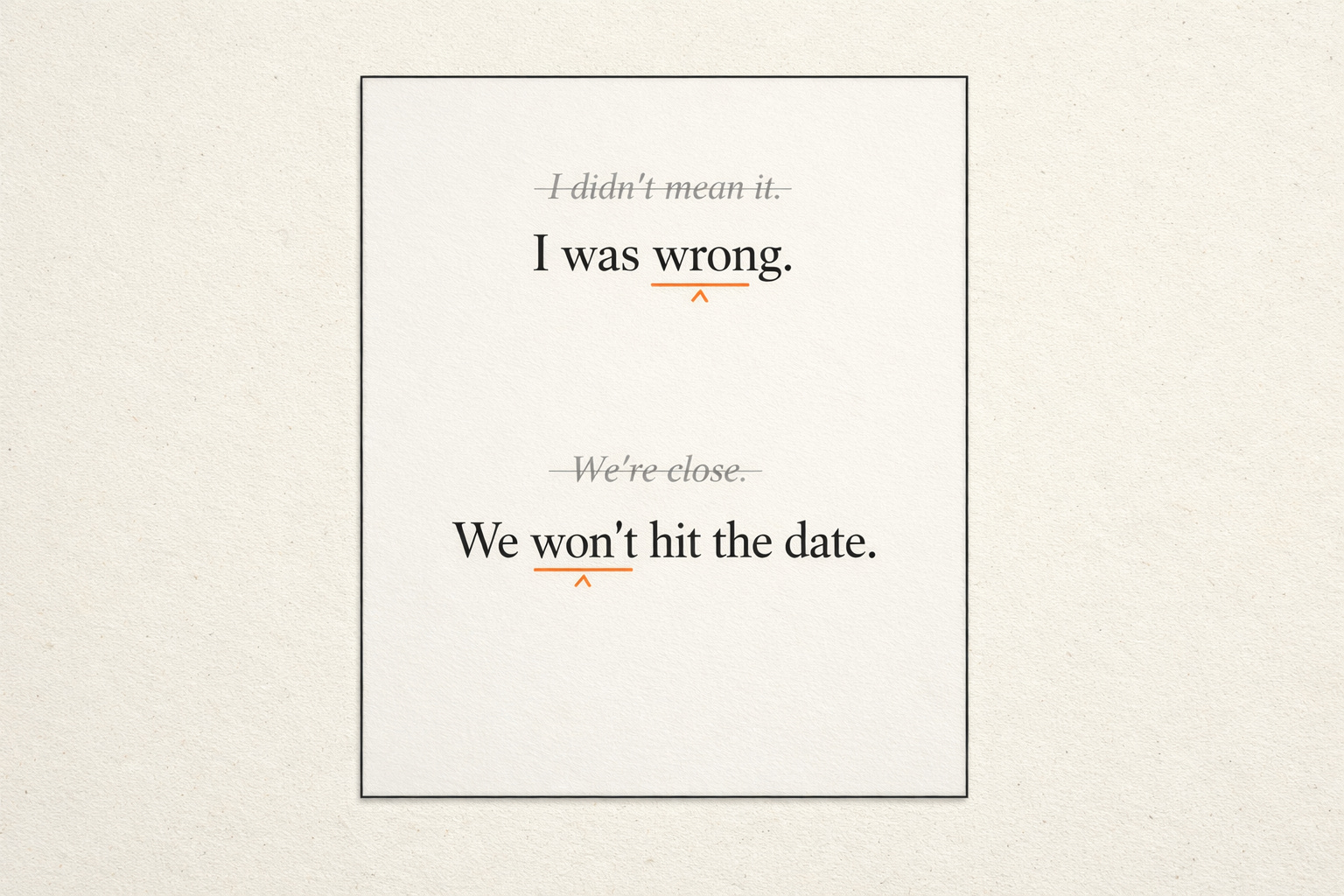
Then I added, “What I need from you next time is a simple, ‘We won’t hit the date.’ Not ‘we’re close.’ Not ‘we should be okay.’ Just that sentence.”
He smiled a little because he knew exactly what I meant, and because simple sentences are hard when you think your job is to protect the mood of the room.
That day didn’t become a case study or a story anyone told on stage. We adjusted the plan, reset expectations, and saved the customer relationship by not pretending.
That’s the real work.
Over the years, I’ve seen the same pattern play out across teams, leaders, and regions, and the people who deliver real results aren’t always the ones who sound the most confident; they’re the ones who do small repairs early, who speak plainly, and who don’t let the hard thing sit for weeks just because naming it feels awkward.
To most people, “consistency” looks boring and sometimes thankless, and it usually shows up as the same set of choices made again and again: making the call you don’t want to make, apologizing without a speech, hearing bad news without punishing the person who brings it, and handling the small things before they become the big thing.
For me, it comes back to the same two sentences from that morning, one to my son and one from my team.
“I was wrong.”
“We won’t hit the date.”
Both sentences create a moment you can feel, a moment where the room goes quiet, and the story you were telling yourself stops working, and the only thing left is what’s real. That moment isn’t comfortable, but it’s real, and once you’ve been through it, you can move forward, because the path is clear.
Enjoy your loved ones and the rest of your day!
And thank you for spending some of it with me.
Warm regards,
Adi